- Home
- About Us
- Shop
- Card Personalization
Smart Card Printer
Card & Consumables
Card Softwares
- RFID & IOT
- Other Services
- Contact Us


RFID anti-counterfeiting solutions India 2026 address an existential threat to Indian manufacturers, retailers, and consumers: counterfeit products flooding markets at an estimated cost of ₹4.8 lakh crores annually—approximately 10-15% of India’s total trade value. Fake pharmaceuticals containing wrong active ingredients or no medication at all pose direct health risks, potentially fatal for patients unaware they’re consuming counterfeits. Counterfeit electronics with substandard components create fire hazards and device failures. Counterfeit luxury goods damage brand prestige while defrauding consumers believing they’re purchasing authentic products. The scale of counterfeiting in India extends across virtually every category—pharmaceuticals, cosmetics, apparel, electronics, automotive components, alcoholic beverages—making comprehensive anti-counterfeiting strategies essential for protecting consumers and legitimate businesses. Ecartes Technology helps organizations combat these challenges through advanced RFID-enabled authentication and traceability solutions designed to secure products throughout the supply chain.
Traditional anti-counterfeiting methods—security holograms, unique serial numbers, special inks, physical markers—prove inadequate against sophisticated counterfeiters who replicate these features with remarkable accuracy. Consumers cannot reliably authenticate products through visual inspection; many fake security features fool casual observation. Retailers and distributors struggle verifying product authenticity during procurement, often unwittingly purchasing counterfeit inventory mixed with legitimate goods. Supply chains lack transparency preventing identification of exactly where counterfeits entered legitimate distribution channels. Product authentication RFID India transforms this scenario through tamper-evident RFID tags creating cryptographic authentication impossible to replicate without access to manufacturer encryption systems. Ecartes Technology enhances this protection by integrating RFID authentication, serialization, and real-time tracking capabilities that enable businesses to verify product authenticity instantly and identify counterfeit infiltration points across distribution networks.
The regulatory environment increasingly demands anti-counterfeiting measures. India’s government mandates pharmaceutical serialization making unique identification mandatory for drug packages. Export markets—particularly the US and European Union—require proof of product authenticity and supply chain integrity from Indian exporters. Insurance companies reduce premiums for brands implementing RFID anti-counterfeiting, recognizing reduced loss risks from counterfeit infiltration. These regulatory and financial pressures combine to make RFID anti-counterfeiting solutions India 2026 transition from a competitive differentiator to a competitive necessity. With Ecartes Technology’s RFID anti-counterfeiting solutions, organizations can achieve stronger compliance, improved supply chain transparency, enhanced brand protection, and greater consumer confidence in product authenticity.
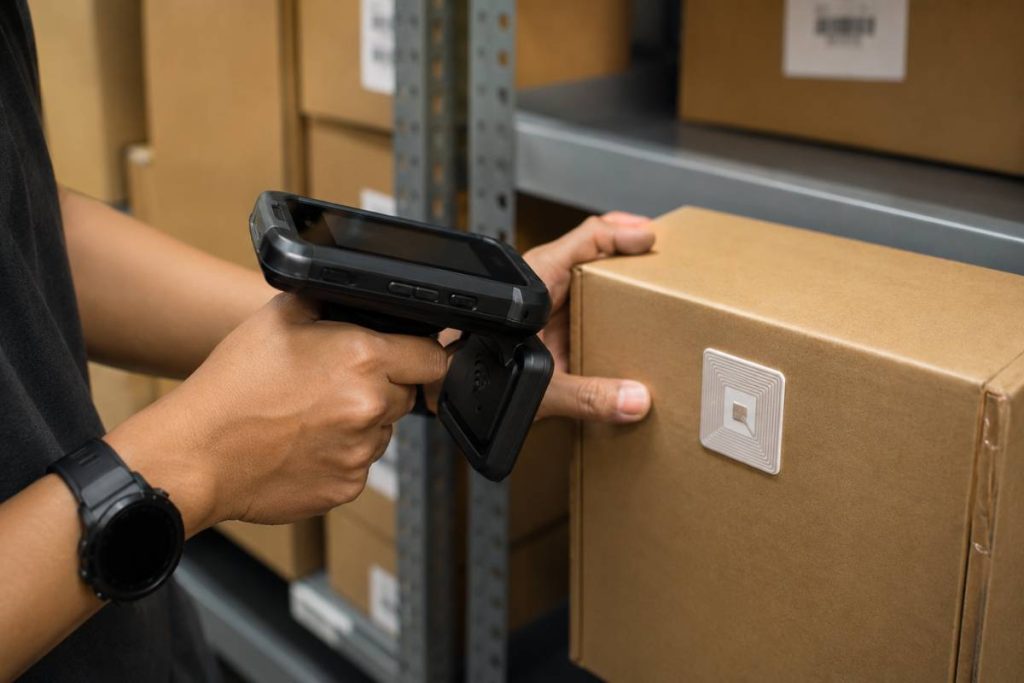

RFID anti-counterfeiting solutions India 2026 employs cryptographically-enabled RFID tags encoding unique product identifiers linked to manufacturer databases storing complete product information. Unlike traditional serialization using printed serial numbers easily duplicated by counterfeiters, RFID tags contain encrypted chips making duplication virtually impossible without manufacturer encryption keys. The technology works through secure authentication protocols where readers interrogate tags, verify cryptographic signatures, and cross-reference against manufacturer databases confirming product authenticity.
The architecture combines multiple security layers preventing counterfeiting. Physical layer security uses specialized tag designs difficult to replicate—components not commercially available, custom antenna designs, proprietary chip architectures. Counterfeiters can create tags resembling RFID tags superficially, but cryptographic authentication immediately reveals counterfeits. Chemical layer security embeds security indicators in tag materials that deteriorate or reveal hidden information if counterfeits attempt opening tags for chip extraction and cloning. Digital layer security uses encryption keys controlled exclusively by manufacturers—authentication servers verify tag signatures ensuring counterfeits failing authentication verification.
Serialization integration creates unique identification for every product unit. Rather than generic product barcodes (a single barcode representing all instances of Product X), RFID anti-counterfeiting assigns unique serial numbers to individual packages. This item-level serialization enables track-and-trace throughout supply chains—manufacturers know exactly which distributor received which specific products, distributors know which retailers received which items, retailers know which customers purchased specific units. This transparency prevents diversion into grey markets or counterfeiting operations using legitimate supply chain access.
Blockchain integration represents emerging frontier for anti-counterfeiting. RFID tags encoding blockchain hash pointers create cryptographically-verified product records anyone can independently verify without relying on centralized manufacturer databases. Consumers scanning products can instantly verify authenticity by checking blockchain records—if product doesn’t appear in blockchain ledger with matching hash, it’s counterfeit. This decentralized verification proves far more resilient than database-dependent systems where counterfeiters might access manufacturer servers or create fake lookup databases.
Temperature and environmental monitoring integration adds verification layers for products with quality-sensitive requirements. Pharma and food products contain sensor RFID tags recording temperature exposures throughout supply chains. Counterfeiters producing fake products under uncontrolled conditions lack authentic temperature histories; genuine products maintain documented temperature compliance while counterfeits show gaps or impossible exposure patterns revealing authenticity questions. This physical evidence of proper handling proves authenticity beyond cryptographic verification.
Product authentication RFID India enables consumers, retailers, and regulators to verify product authenticity instantly through simple scanning procedures requiring no special equipment beyond standard RFID readers. A consumer purchasing pharmaceutical products can scan packages confirming authentic medication; if tag doesn’t authenticate or database lookup shows product details inconsistent with package labeling, consumers avoid counterfeit risks. Retailers receiving shipments scan pallets confirming all items match expected authenticity—if percentage of items fails authentication, shipments can be rejected before payment or returned to suppliers for investigation.
The consumer trust implications prove transformational, particularly for premium products where authenticity represents core brand value. Luxury goods manufacturers increasingly implement RFID enabling customers to verify purchases as authentic, appealing to status-conscious consumers wanting assurance products are genuine. Handbag, jewelry, and apparel manufacturers issue certificates authenticating purchases through RFID scanning—customers can prove legitimate ownership, important for insurance purposes and resale value. This consumer-facing authenticity verification becomes powerful brand marketing advantage differentiating authentic items from counterfeits.
Supply chain transparency from RFID serialization creates brand protection capabilities extending beyond authentication. When counterfeiters infiltrate legitimate distribution, RFID records reveal exactly where unauthorized products entered supply chains. If grey market goods (genuine products diverted through unauthorized channels) appear in markets, manufacturers can investigate distributors, retailers, or employees responsible for diversion. This accountability discourages informal market development that often precedes counterfeiting operations.
Warranty and service integration protects consumers while preventing counterfeits. Manufacturers can link RFID product authentication with warranty databases—only products authenticating through RFID system qualify for manufacturer warranties. Customers with counterfeit products attempting warranty claims get rejected, while legitimate product owners receive full warranty support. This consequence incentivizes purchasing from authorized channels where RFID authenticity is guaranteed versus grey markets or street vendors selling counterfeit products.
Regulatory compliance documentation automates through RFID authentication. Exporters proving product authenticity to international customs agents can simply present RFID scan results instead of extensive paperwork—automated systems immediately confirm products are legitimate, genuine Indian manufacturers. This streamlines customs clearance, reduces documentation requirements, and accelerates international shipping benefiting legitimate manufacturers competing with smuggled counterfeits.
Sophisticated counterfeiters increasingly target legitimate supply chains, infiltrating distribution at multiple points. Brand protection RFID technology enables manufacturers controlling distribution through channelized track-and-trace proving products move through authorized distributors, retailers, and resellers. Products sold through unauthorized channels appear as counterfeits or grey market goods in RFID records, alerting brands to unauthorized distribution.
The integration with authorized distributor networks creates verifiable supply chains. When manufacturers issue products with RFID tags to distributors, the tags encode distributor information and authorization levels. Products moving to retailers outside authorized distribution networks show anomalies in RFID records—items appear in locations without corresponding authorization records. This mismatch enables rapid investigation and intervention before products reach consumer markets damaged by unauthorized handling or storage.
Digital marketplace integration extends brand protection to e-commerce where counterfeiters particularly thrive. Authorized e-commerce retailers scan received products confirming authenticity through RFID; counterfeits attempting to list on authorized marketplaces can’t authenticate, preventing their sale. Unauthorized marketplaces selling counterfeit products can’t authenticate items, creating friction for fraudsters. Some manufacturers implement RFID-based geofencing preventing products from being scanned outside designated retail territories—if products travel to unauthorized locations, geofencing alerts trigger brand protection responses.
Reverse supply chain integration protects against counterfeit re-entry. When customers return products for warranty service or replacement, RFID authentication confirms returned items are genuine before processing. Customers attempting to return counterfeit products for refunds get rejected, while legitimate returns proceed seamlessly. This prevents schemes where counterfeits get returned to retailers for cash refunds, converting fake products into manufacturer losses.
The competitive intelligence capabilities of RFID tracking benefit brand management. Tracking which retailers sell highest volumes, customer demographics purchasing specific products, and regional popularity variations inform marketing strategies and product development. Counterfeiter activity becomes visible—unusual product concentrations in specific regions, sales through unauthorized channels, customer complaints about products suggesting authentic distribution was compromised—enabling targeted enforcement actions against counterfeiting operations.
Counterfeit pharmaceuticals represent the highest-consequence counterfeiting category, directly endangering consumer health. Fake product prevention RFID addressing pharmaceutical serialization provides regulatory compliance (increasingly mandatory) while protecting patients from dangerous counterfeits. The United Nations estimates that 10% of pharmaceutical products globally are counterfeit or substandard—in India reaching higher percentages in certain product categories. Patients taking medications believing they’re receiving prescribed treatments while actually consuming counterfeits (potentially containing wrong active ingredients, incorrect dosages, or toxic substitutes) face serious health consequences including organ damage, treatment failures, and deaths.
Pharmaceutical serialization through RFID makes mandatory by Indian pharmacy regulations and increasingly by international markets. Every drug package requires unique identification enabling complete traceability throughout supply chains. RFID improves serialization through cryptographic authentication preventing counterfeits duplicating simple printed serial numbers. Dispensing pharmacies scan medications confirming authenticity before dispensing—if RFID authentication fails, pharmacies refuse sale enabling patient protection at the point of consumption.
Cosmetics and personal care counterfeiting poses less acute health risks than pharmaceuticals but still creates consumer safety concerns. Counterfeit skincare products may contain undisclosed harmful chemicals, banned substances, or untested ingredients causing allergic reactions or chronic health issues. RFID anti-counterfeiting enables cosmetics brands implementing authentication protecting consumers. The integration with dermatological testing and safety certification databases enables consumer verification that products meet safety standards versus counterfeit creations lacking proper testing.
Food and beverage counterfeiting creates consumer safety hazards particularly for premium or specialty products. Counterfeit alcoholic beverages might contain toxic methanol or harmful additives. Counterfeit organic/premium food products might contain pesticides or non-organic ingredients contradicting label claims. RFID authentication enables consumers verifying genuine products meeting claimed specifications. Regulatory agencies (FDA-equivalent authorities) can enforce food safety standards through RFID authentication preventing counterfeit products reaching consumers.
Infant formula counterfeiting represents particularly dangerous application—parents purchasing what they believe are premium formulas for infants may unknowingly give substandard counterfeits lacking nutrition, contaminated with harmful bacteria, or containing dangerous adulterants. RFID authentication of infant formulas enables parents verifying purchases before feeding babies, potentially preventing serious health incidents. The high-value premium infant formulas attract counterfeiters making this category high-priority for anti-counterfeiting measures.
Regulatory mandates increasingly require pharmaceutical serialization creating complete supply chain visibility from manufacturing through patient consumption. Pharmaceutical serialization RFID goes beyond simple barcode serialization through cryptographic authentication preventing counterfeit serialization. The multi-stakeholder ecosystem (manufacturers, wholesalers, distributors, retailers, pharmacies, patients) requires interoperable systems enabling different organizations verifying authenticity through shared authentication protocols.
The implementation challenges include cost—adding RFID tags to individual pharmaceutical packages increases product costs. Regulatory requirements provide manufacturer mandates but don’t cover cost implications. Manufacturers implement RFID analyzing cost-benefit considering brand protection value, warranty reduction from counterfeits, and market price premiums customers pay for guaranteed authenticity. Premium pharmaceutical categories—high-value biologics, specialty medications, branded drugs—see RFID adoption first where authentication value justifies costs.
Integration with pharmacy systems creates dispensing-point verification. When patients arrive with prescriptions, pharmacies scan medications confirming authenticity through RFID before dispensing. RFID systems provide complete product information enabling pharmacists verifying correct medications for prescriptions. If dispensary errors occur (different medication from prescribed), RFID systems detect mismatches triggering correction before patient harm. This medication safety application provides benefits beyond counterfeiting prevention.
Track-and-trace integration throughout pharmaceutical supply chains identifies diversion and unauthorized distribution. Medicines intended for domestic markets illegally exported to other countries create supply shortages at home while creating grey market distribution internationally. RFID tracking identifies when legitimate pharmaceutical products leave authorized distribution channels, enabling investigation and enforcement against diversion operations. Insurance companies, pharmacy benefit managers, and healthcare systems can verify medications moving through legitimate channels versus suspiciously-priced grey market alternatives.
Post-market surveillance capabilities enable identification of manufacturing quality issues quickly. If RFID-tracked medications from specific batch originating from particular manufacturing line trigger unexpected adverse events, traceability enables rapid identification of affected patients, investigation of root causes, and targeted recalls affecting only compromised batches rather than entire product lines. This targeted approach prevents unnecessary medication shortages from overly broad recalls while ensuring safety.
Successful RFID anti-counterfeiting solution India 2026 deployment requires stakeholder alignment across supply chains. Manufacturers must invest in RFID infrastructure and authentication databases. Distributors and retailers must implement scanning capabilities verifying received products. Regulatory agencies must establish standards and enforcement mechanisms. Consumers must understand authentication benefits enabling easy verification procedures.
Cost considerations influence adoption rates. RFID tags cost ₹2-10 per unit depending on specifications, adding meaningful cost to low-value products. High-value pharmaceuticals, luxury goods, and electronics justifying authentication investments see rapid adoption. Mid-range products require careful cost-benefit analysis. Regulatory mandates accelerate adoption by making RFID necessary rather than optional—manufacturers must implement regardless of cost if regulations require serialization.
The ecosystem development proves critical. If only individual manufacturers implement anti-counterfeiting while competitors don’t, competitive disadvantages can emerge. Industry associations establishing standards for RFID authentication enable interoperable solutions where multiple manufacturers’ products share authentication protocols. Government promotion through regulatory requirements and import/export authentication mandates accelerates ecosystem development making RFID anti-counterfeiting mainstream rather than niche capability.
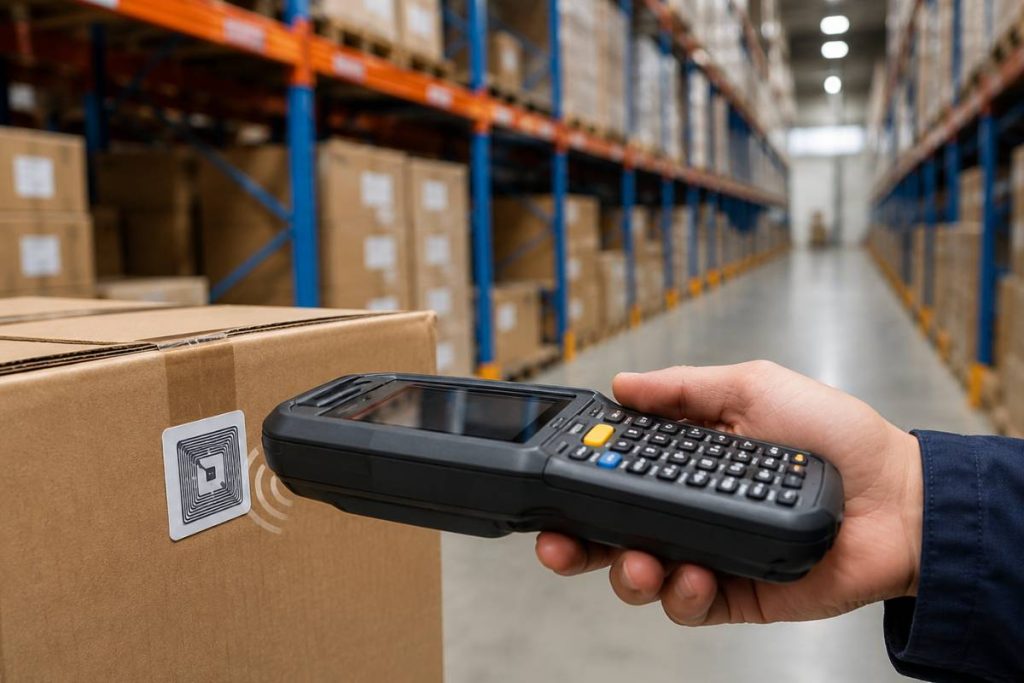
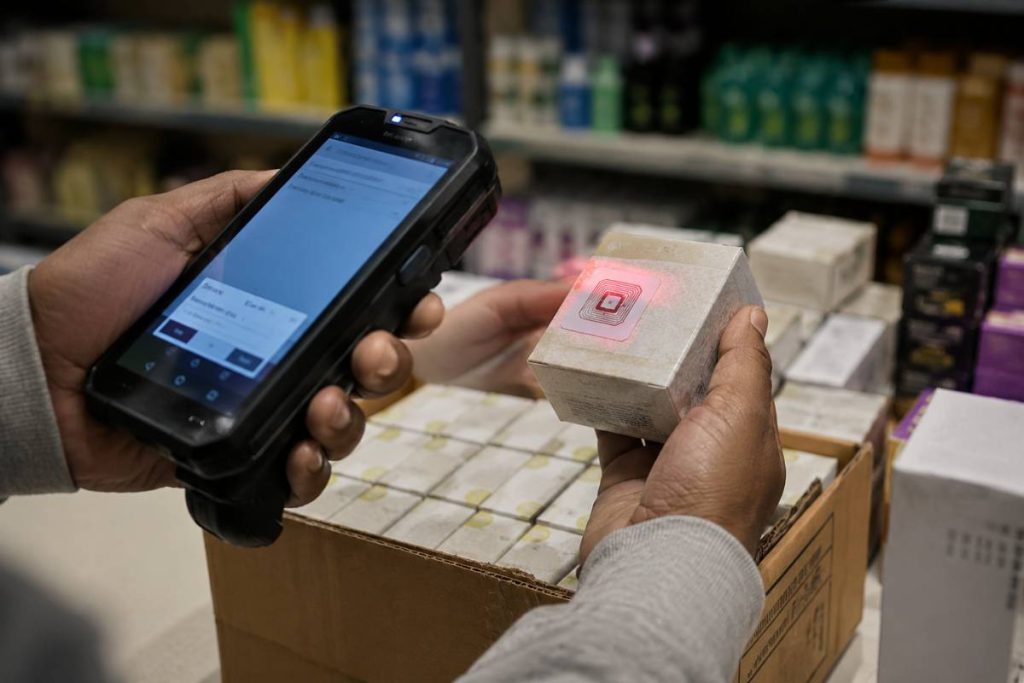
India’s manufacturers, pharmaceutical companies, consumer brands, retailers, and exporters face growing challenges from counterfeit products, unauthorized distribution, supply chain manipulation, and product authenticity concerns that result in financial losses, regulatory risks, and declining consumer trust.
Ecartes Technology delivers advanced RFID anti-counterfeiting solutions India 2026 combining RFID authentication tags, serialization systems, product traceability platforms, supply chain monitoring, brand protection tools, and real-time verification technologies. With 28+ years of RFID expertise and trusted technology experience, we help organizations prevent counterfeiting, authenticate products, strengthen regulatory compliance, improve supply chain visibility, protect brand reputation, and build greater consumer confidence.
RFID anti-counterfeiting solutions India 2026 use cryptographic authentication making duplication extremely difficult without manufacturer encryption keys. Tags contain encrypted chips responding to authentication challenges through cryptographic algorithms—counterfeiters can create tags visually resembling RFID tags but authentication protocols reveal counterfeits immediately. Advanced implementations include physical security features (proprietary components not commercially available, custom antenna designs) making tag creation difficult even with technical expertise. Blockchain integration enables decentralized verification anyone can perform independently.
Yes, product authentication RFID India enables consumers to verify authenticity through simple procedures. Consumers scan product tags with smartphone apps or readers; systems instantly display product information confirming authenticity or flagging counterfeits. No special technical knowledge required—if tag authenticates and product information matches physical packaging, the product is genuine. If the tag doesn’t authenticate or database lookup shows inconsistencies, consumers know the product is counterfeit and can return it or report it to authorities.
Costs vary based on product types and volume. RFID tag costs range ₹2-10 per unit depending on specifications. Authentication server infrastructure costs ₹50-100 lakhs for small manufacturers, ₹1-3 crores for large operations. Integration with existing manufacturing and logistics systems costs ₹20-50 lakhs. Total implementation costs vary but per-unit costs drop as volumes scale. For high-value products (pharmaceuticals, luxury goods, premium electronics) where counterfeiting costs brand reputation and sales, RFID cost justification is clear. For low-value commodities, costs may exceed counterfeit loss risks.
Pharmaceutical serialization RFID tracks each unique package throughout supply chains from manufacturing through patient consumption. When medicines diverted to unauthorized markets leave legitimate distribution channels, RFID records show this unauthorized movement. If same medications appear in grey markets at suspicious prices, authentication reveals diversion. Regulatory agencies enforce against diversion operations using RFID evidence. Pharmacies verifying authenticity prevent counterfeit medications dispensed to patients.
Yes, blockchain integration with RFID enables decentralized anti-counterfeiting where consumers verify authenticity independently without relying on manufacturer databases. RFID tags encode blockchain hash pointers; scanning tags display blockchain records on immutable ledger. Consumers verify products by confirming blockchain records match physical products—if blockchain has no record, the product is counterfeit. This decentralized approach proves more resilient than manufacturer-controlled databases vulnerable to hacking or compromise.
RFID tags integrate with packaging through placement inside boxes (difficult to separate without destroying packaging), printing onto security labels with holograms, or embedding in special materials. Physical packaging security features (unique holograms, special inks, security threads) complement RFID authentication creating layered protection. Consumers visually verify physical security features while RFID confirms digital authenticity – counterfeits typically fail at least one verification layer. Tamper-evident packaging combined with RFID creates comprehensive anti-counterfeiting solutions.
Enhance efficiency, accuracy, and security with our cutting-edge RFID solutions. From inventory management to access control, we provide customized RFID systems tailored to your needs. Optimize operations and reduce costs—get started today!
© Powered by E-Cartes Technology Pvt. Ltd.
Design & Developed By 


