- Home
- About Us
- Shop
- Card Personalization
Smart Card Printer
Card & Consumables
Card Softwares
- RFID & IOT
- Other Services
- Contact Us
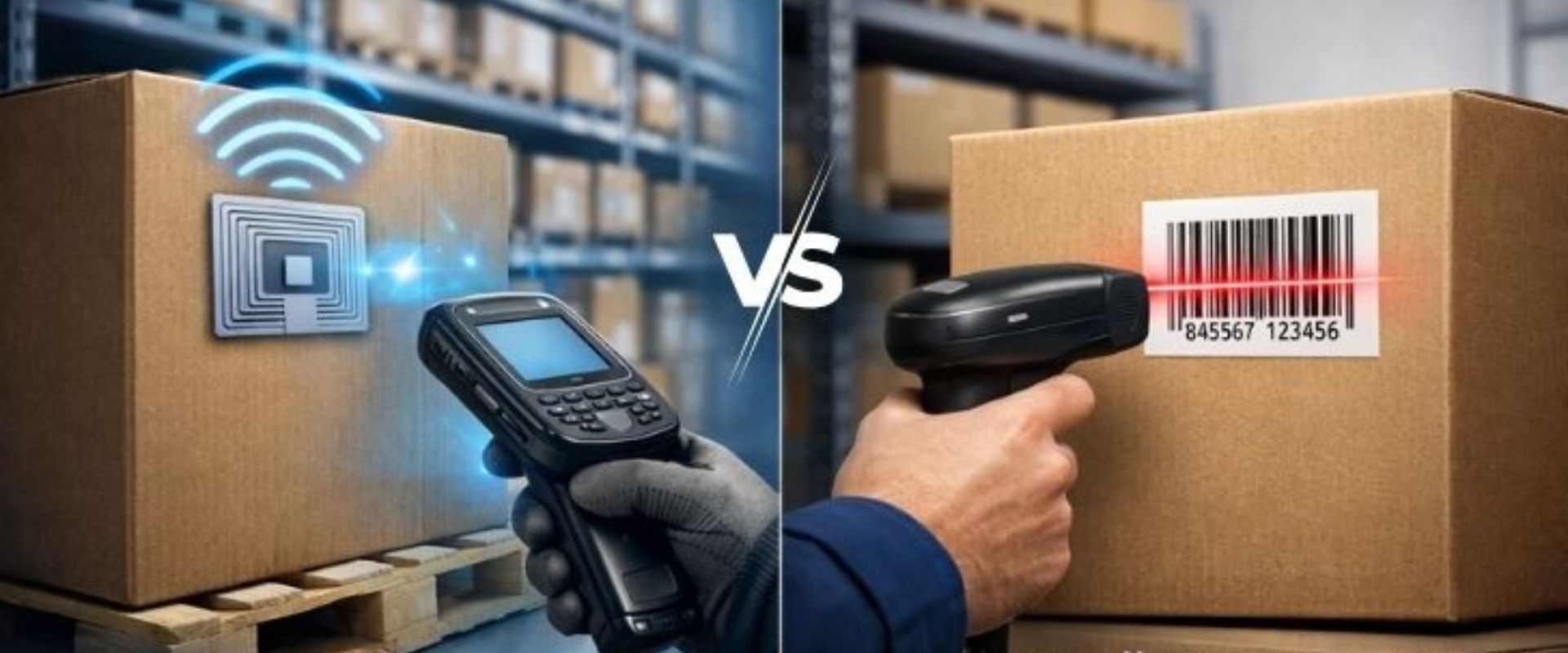
RFID vs barcode systems represents a fundamental technology decision impacting operational efficiency across retail, warehouse, healthcare, and manufacturing environments throughout India. Barcode technology, while established and economical, offers limited capabilities that increasingly constrain modern operations demanding real-time visibility and automation.
RFID vs barcode comparison reveals why industry leaders globally are transitioning to RFID-based systems for critical tracking applications requiring speed, accuracy, and scalability. The differences extend far beyond simple technical specifications—RFID vs barcode represents a strategic shift from periodic point-of-time visibility to continuous real-time tracking enabling data-driven decision making across all business operations.
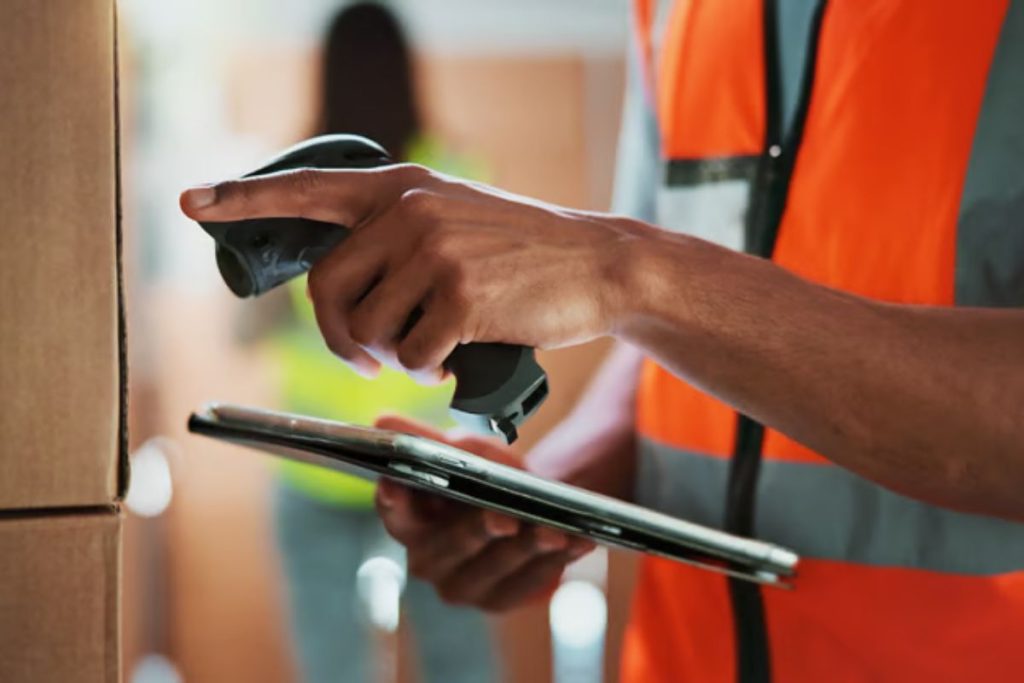
Barcode systems require line-of-sight scanning of individual items sequentially—a retail clerk must scan each product individually at checkout, warehouse staff must scan barcodes one-at-a-time during inventory counting, and documents must be scanned individually for tracking purposes. RFID vs barcode systems in these scenarios shows dramatic efficiency differences that translate directly to operational costs.
RFID technology enables simultaneous scanning of hundreds of items without line-of-sight requirements—a retail transaction processes in seconds instead of minutes, warehouse inventory verification completes in hours instead of days, and document tracking happens automatically without manual intervention. RFID vs barcode isn’t just speed improvement; it’s operational transformation enabling business models impossible with barcode limitations. Modern retailers using RFID complete entire store inventory in 2-3 hours weekly versus 2-3 days quarterly with barcodes.
Security and anti-counterfeiting capabilities differentiate RFID vs barcode technology fundamentally in ways critical for high-value products. Barcode labels can be replicated with basic printing equipment costing under ₹10,000, enabling widespread counterfeiting of barcodes themselves and the products they identify. RFID tags employ encryption and cryptographic authentication making duplication virtually impossible without manufacturer access to encryption keys protected by security infrastructure.
RFID vs barcode systems in security context shows RFID as far superior for protecting high-value products, pharmaceuticals, and luxury goods from counterfeiting threats that cost Indian businesses ₹40,000+ crores annually. Additionally, RFID provides item-level visibility (unique serial numbers for every individual item) versus barcode’s product-level identification (same barcode for thousands of identical items). These capabilities combined make RFID vs barcode systems decision clear for organizations prioritizing efficiency, security, and automation in modern competitive environments.
RFID vs barcode systems performance metrics reveal compelling advantages across every operational dimension. Read range comparison shows RFID operating at 10-30cm (passive) to 100m+ (active) versus barcode requiring 15-25cm maximum distance with direct line-of-sight. Read speed comparison: RFID processes 100+ items per second versus barcode at 1-2 items per second—a 50x speed advantage transforming high-volume operations. Durability differences: RFID tags withstand extreme conditions including heat, moisture, chemicals, and physical abuse while barcodes fade with wear, smear with moisture, and become unreadable when damaged. RFID vs barcode systems in harsh environments like manufacturing floors, cold storage warehouses, and outdoor logistics operations shows RFID’s substantial superiority for industrial applications. Automation capabilities: RFID enables hands-free automated tracking through gates and zones while barcodes require intentional manual scanning for every transaction. They differ fundamentally in operational flexibility and integration potential. RFID vs barcode systems comparison shows RFID enabling simultaneous multi-item reading versus sequential barcode scanning required for inventory operations. RFID vs barcode technology provides superior reliability in challenging conditions where barcodes become unreadable, creating operational disruptions and data quality issues. RFID tags also offer rewritable memory for dynamic data updates impossible with static barcode labels printed once and never modified.
RFID vs barcode systems initially favors barcodes on cost (RFID tags ₹2-10 versus barcodes ₹0.20-1 per unit). However, RFID vs barcode systems ROI analysis shows RFID recovers cost premium within 12-24 months through labor savings and efficiency gains that compound over time. Long-term RFID vs barcode systems comparison overwhelmingly favors RFID when factoring total operational impact including labor productivity, error reduction, and customer satisfaction improvements. For applications with high volume scanning (1000+ items daily), frequent misreads (5%+ barcode error rates), or demanding automation requirements, RFID vs barcode systems economics clearly favor RFID implementation. RFID vs barcode systems show total cost of ownership favoring RFID substantially when comprehensive financial analysis includes labor, error costs, customer service impacts, and operational disruptions. RFID vs barcode systems financial analysis reveals labor productivity improvements alone offsetting tag cost premiums within 18 months for most operations. Additional savings come from reduced safety stock (better inventory visibility), prevented shrinkage (item-level tracking), and improved customer satisfaction (accurate orders). RFID vs barcode technology proves more cost-effective long-term despite higher initial per-unit costs through operational efficiency gains compounding across thousands of transactions. Modern RFID tag prices have dropped 60% over the past 5 years, narrowing the cost gap with barcodes while operational advantages continue widening.
RFID vs barcode systems migration strategies often use hybrid approaches during transition periods to minimize disruption while building organizational capability. Items tagged with both RFID and barcodes enable dual-scanning systems supporting both technologies during transition phases. RFID handles automated tracking while barcodes serve as backup during read failures or for legacy customer requirements. This RFID vs barcode systems hybrid approach eases implementation risks and employee adoption challenges while building confidence in RFID capabilities. Phased transition starting with high-volume SKUs enables RFID vs barcode systems ROI demonstration before expanding to broader operations and lower-volume items. RFID vs barcode systems parallel running prevents operational disruption while teams develop expertise and processes adapt to new capabilities. RFID vs barcode systems hybrid approaches minimize transition risks significantly while delivering early ROI through targeted applications. RFID vs barcode systems gradual implementation enables staff training on RFID vs barcode systems differences without overwhelming workers with sudden complete change. RFID vs barcode technology adoption succeeds through careful change management combining both technologies temporarily while organization develops new capabilities, processes, and metrics. Most successful transitions complete within 6-12 months from initial pilot to full deployment, with hybrid operations continuing for 12-18 months ensuring smooth migration without operational disruptions affecting customer service or financial performance.
India’s retailers, warehouses, and manufacturers face operational challenges from barcode limitations including slow scanning, frequent misreads, inventory inaccuracy, inability to automate, and security vulnerabilities. Ecartes Technology delivers RFID vs barcode systems comparison analysis and migration strategies helping organizations transition from barcode systems to advanced RFID technology smoothly. Complete RFID vs barcode technology implementation with hardware deployment, software integration, staff training, and performance optimization ensuring smooth transition and rapid ROI achievement. With 28+ years RFID expertise serving major Indian enterprises, we deliver transformation that competitors using outdated barcode systems simply cannot match in efficiency or scalability.
RFID vs barcode enables real-time tracking and automation impossible with barcodes. While barcodes require manual line-of-sight scanning, RFID provides hands-free automated visibility transforming operations through RFID vs barcode systems advantages including 50x speed improvement and 99% accuracy levels.
Yes, hybrid RFID vs barcode approaches ease transitions significantly. Dual-tagged items allow gradual migration from barcode to RFID while maintaining RFID vs barcode compatibility with legacy customer requirements and supplier capabilities during transition periods of 12-18 months.
RFID tags cost ₹2-10 vs barcodes ₹0.20-1 per unit initially. However, RFID vs barcode systems ROI shows payback within 12-24 months through labor and efficiency savings from RFID vs barcode advantages, with long-term total cost of ownership favoring RFID substantially.
Yes, RFID vs barcode shows RFID superior in harsh conditions and wet environments where barcodes fail. Barcodes struggle in challenging settings including cold storage, manufacturing floors, and outdoor logistics where RFID vs barcode advantages become critical for operational continuity.
RFID vs barcode systems implementation typically takes 3-6 months for pilot deployment including infrastructure, software setup, and staff training. Full enterprise transition for successful RFID vs barcode systems migration completes within 12-18 months including hybrid operation periods ensuring smooth change.
RFID vs barcode security shows RFID with cryptographic authentication preventing counterfeiting impossible with barcodes. Barcodes can be replicated with simple equipment making RFID vs barcode systems superior for high-value items, pharmaceuticals, and luxury goods requiring authentication.
Enhance efficiency, accuracy, and security with our cutting-edge RFID solutions. From inventory management to access control, we provide customized RFID systems tailored to your needs. Optimize operations and reduce costs—get started today!