- Home
- About Us
- Shop
- Card Personalization
Smart Card Printer
Card & Consumables
Card Softwares
- RFID & IOT
- Other Services
- Contact Us

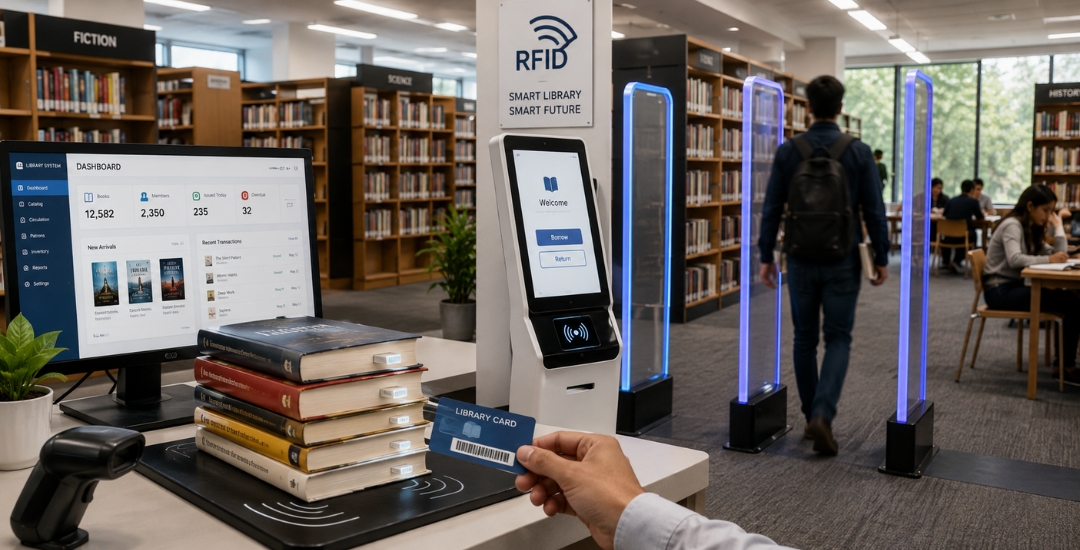
RFID access control system India 2026 transforms how corporate offices, educational campuses, government facilities, hospitals, and manufacturing plants secure entrances while managing employee movements, visitor tracking, and access authorizations. India’s rapid corporate expansion—with over 150 million white-collar workers in organized sectors—creates massive demand for secure yet user-friendly access solutions balancing security requirements with professional comfort. Traditional badge-based systems using magnetic stripe cards or proximity readers function adequately but offer limited intelligence regarding who accessed which areas when, create security vulnerabilities from badge sharing or loss, and provide minimal integration with employee management systems. Ecartes Technology helps organizations overcome these challenges by delivering intelligent RFID-based access control solutions tailored for modern enterprises. RFID access control system India 2026 eliminates these limitations through advanced identification, real-time monitoring, and comprehensive analytics.
The COVID-19 pandemic accelerated RFID adoption by highlighting contactless security importance. Post-pandemic, organizations continue prioritizing hygiene-focused technologies—touchless entry systems prove far more appealing than shared door handles or keypads requiring physical contact. Smart office entry system RFID addresses this demand while delivering superior security compared to traditional contact-based systems. Contactless access control India implementations enable employees to enter facilities simply by presenting RFID badges from pockets or bags—no touching door handles, keypads, or readers—while maintaining detailed audit trails and advanced permission controls impossible with purely contact-based systems. Ecartes Technology supports this transition with scalable RFID access solutions that enhance workplace safety, operational efficiency, and security management.
The employee attendance and security integration represents another critical driver of RFID adoption. Organizations previously using separate systems for physical security (access gates), time tracking (attendance punch cards), and visitor management created data silos preventing comprehensive facility awareness. RFID access control system India 2026 unifies these functions through single badge authentication providing simultaneous security verification, attendance logging, and location tracking—eliminating duplicate systems while enabling integrated analytics showing employee movements, area utilization, and security compliance. With Ecartes Technology’s RFID access control solutions, organizations can seamlessly integrate security, attendance, and visitor management into a unified platform for improved visibility, compliance, and operational control.
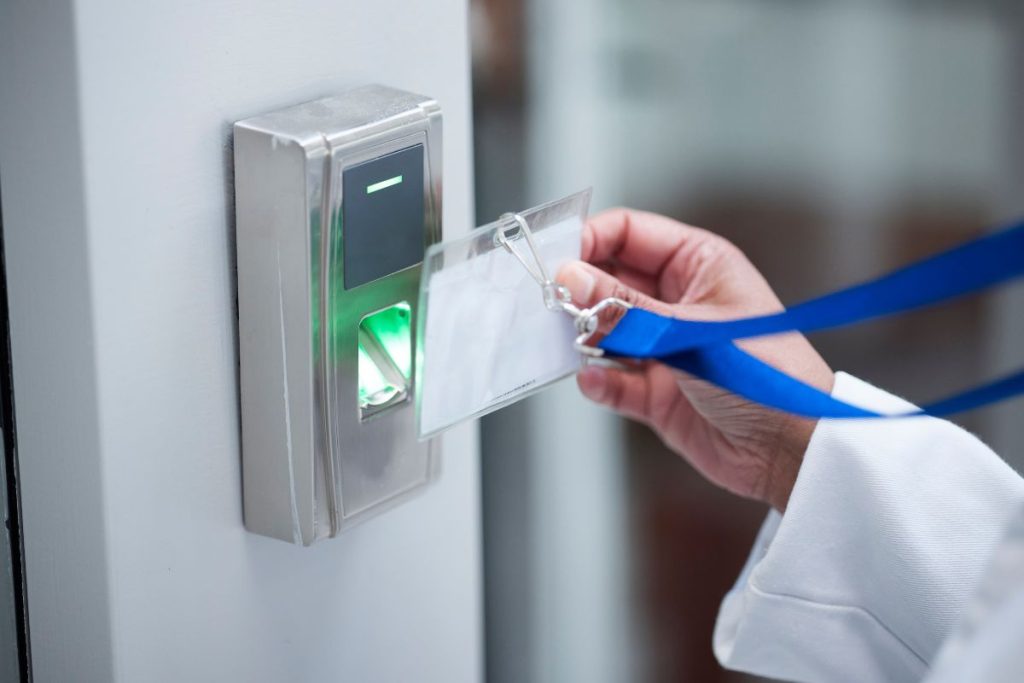
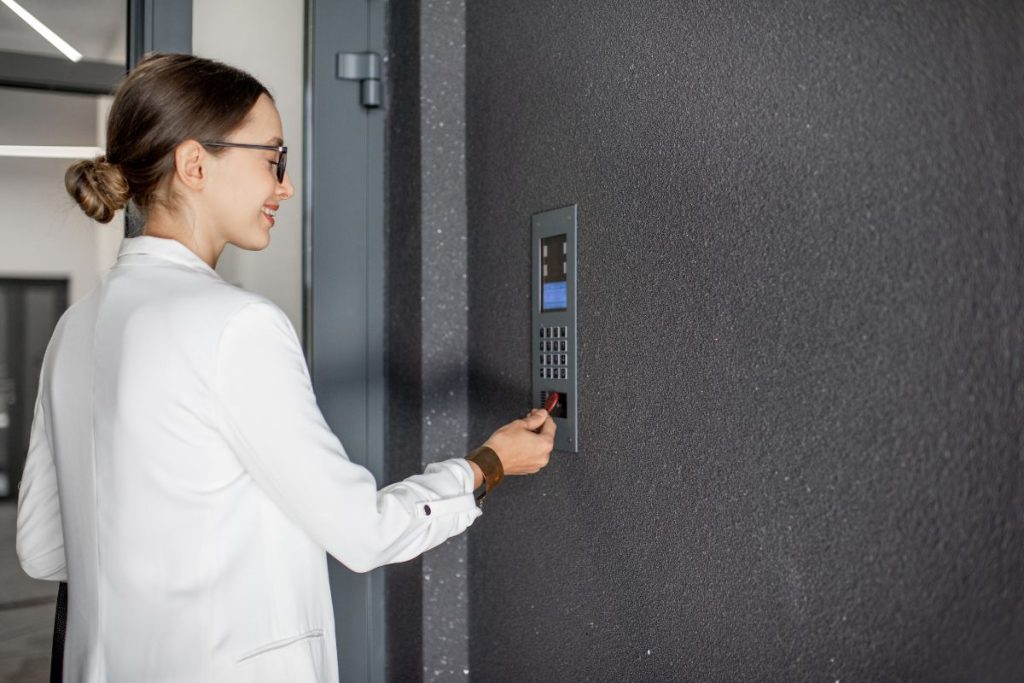
RFID access control system India 2026 employs passive HF RFID badges issued to employees, contractors, and authorized visitors, combined with reader-controlled electronic locks at entry points and access-restricted zones. The HF frequency (13.56 MHz) provides optimal performance for security applications—read ranges of 10-30 cm (typical badge distance from readers) enable intentional card presentation preventing accidental access while avoiding long-range reading privacy issues. Readers validate badge credentials against access control databases in milliseconds, triggering magnetic locks to release doors only for authorized individuals, while simultaneously logging access events for audit trails.
The system architecture combines multiple components coordinating seamlessly. Smart office entry system RFID begins with badge issuance—each badge contains unique identifiers and optionally includes employee photos, security levels, and biometric templates. Door readers interrogate approaching badges, validate credentials against access control lists, and trigger electronic lock release upon authorization. Multi-factor authentication integrates biometric verification—readers combining RFID card reading with fingerprint or iris scanning provide security unattainable through cards alone, preventing unauthorized access if badges are lost, stolen, or shared.
Zone-based access restrictions enable granular security. An organization might assign access levels: All Employees (general office areas), Team Leads (conference rooms and resource libraries), Finance Department (accounting department), and Executives (executive suite). RFID access control automatically enforces these restrictions—a badge granted “All Employees” clearance opens general area doors but triggers alarms and denies entry to restricted zones. If an employee changes departments, a single system update modifies badge access levels immediately without requiring new physical badges, reducing administration overhead compared to magnetic stripe cards requiring physical replacement.
Time-based access restrictions add additional security dimensions. Parking area access might permit 6 AM to 10 PM except weekends when visitor parking opens. Server room access might restrict to IT personnel 24/7 except during maintenance windows requiring contractor access. Conference rooms might restrict outside business hours except with executive override authorization. RFID systems encode these temporal restrictions in software, enabling changes without badge modification—critical for responding to security incidents or policy changes affecting facility access.
Visitor management integration represents increasingly important access control function. Organizations issue temporary badges to contractors, clients, delivery personnel, and other non-employees requiring campus access. RFID visitor tracking automatically restricts temporary badge access to specific areas, expiration dates, and escorting requirements. If a contractor badge expires, the system denies access automatically without manual intervention. If visitor protocol requires employee escorts, the system alerts reception when escorts fail to accompany visitors, triggering security response.
Employee attendance RFID India systems replace traditional punch cards, biometric scanners, and manual sign-in sheets with contactless badge-based attendance capturing. When employees present badges at entry readers, the system automatically logs arrival times without requiring punch cards, keypads, or manual intervention. This automation eliminates common attendance manipulation problems: employees punch in then leaving early, friends punching in colleagues who haven’t arrived, or “buddy punching” creating false attendance records.
The integration with payroll and HR systems transforms attendance from isolated timekeeping into comprehensive workforce analytics. Attendance data automatically feeds payroll calculations—no manual timesheet entry prone to errors or manipulation. Absence patterns become visible through analytics: employees consistently arriving late, taking extended lunch periods, or departing early trigger automated alerts to managers enabling intervention. Compliance with shift schedules or client-mandated presence requirements becomes verifiable through detailed attendance records. For organizations with compliance obligations—service level agreements requiring minimum staffing, client audits requiring documented personnel presence, or labor law compliance monitoring—RFID attendance provides definitive records satisfying regulatory requirements.
Flexible work environment management benefits significantly from RFID attendance integration. Organizations experimenting with hybrid work (some in-office, some remote) use RFID data identifying peak occupancy days, areas experiencing highest usage, and space utilization patterns. This intelligence informs office redesign decisions—maintaining collaboration spaces seeing high utilization while converting underused areas to focused work pods. RFID identifies that Tuesdays and Wednesdays see 85% in-office presence while Mondays and Fridays average 40%, enabling informed decisions about mandatory office days or meeting scheduling.
Wellness and facility planning benefit from occupancy analytics. RFID systems generating hourly occupancy data identify periods when facilities reach capacity, creating potential crowding concerns for health or comfort. Organizations can stagger work schedules, expand facilities, or implement occupancy limits based on data rather than subjective estimation. RFID also tracks area-specific usage—parking garage capacity, elevator demand, cafeteria congestion, gym equipment utilization—enabling targeted improvements addressing actual bottlenecks rather than guessed problems.
Security-focused implementations of building security RFID solution emphasize intrusion prevention and emergency response capabilities extending beyond simple access control into comprehensive facility security. When unauthorized badge usage is detected—someone using a stolen or counterfeit badge—the system doesn’t just deny access; it initiates graduated responses based on severity. First offense might trigger warning alerts to building management. Repeated violations activate security hold procedures preventing subsequent access attempts while alerting security personnel.
Unusual access patterns trigger automated analysis identifying potential security breaches. If an employee normally accessing only their office suddenly attempts entry to sensitive areas, the system flags this as anomalous behavior. If badges are used to access multiple locations simultaneously (impossible for single individuals), the system detects badge duplication or sharing. If after-hours access occurs in areas normally accessed during business hours, the system alerts security. These pattern-detection algorithms reduce false positives through machine learning analyzing individual behavior baselines and flagging genuine deviations.
Emergency evacuation integration provides critical functionality during crises. When emergency alarms activate due to fire, medical incident, or security threat, RFID systems automatically unlock all accessible doors enabling rapid evacuation without requiring manual unlocking. Simultaneously, the system generates real-time occupancy reports showing which employees checked in versus checked out, enabling rescue teams to identify individuals potentially still in buildings. After evacuation, access restrictions reinstate preventing unauthorized re-entry while authorized personnel can override restrictions for emergency response teams.
Perimeter security integration extends RFID access control beyond building entrances to vehicle gates, parking area barriers, and property boundaries. Employee badges grant automatic gate opening—employees simply drive up and gates open upon badge detection in vehicles. Visitor vehicles require manual gate operations keeping non-employee vehicles excluded. This automation reduces security guard requirements while providing superior documentation compared to manual gate logs—complete electronic records show exactly which vehicles and drivers entered when, creating accountability for all property access.
Contractor and temporary personnel management becomes far more sophisticated through RFID integration. Organizations can issue color-coded badges identifying contractor status, restrict to specific buildings/zones, set expiration dates, and require escorts. Contractors attempting to access unauthorized areas trigger alerts. If contractors exceed scheduled access dates (should leave Friday but try accessing Monday), systems deny entry while notifying both security and the contractor’s employer. This systematic management prevents problems where contractors overstay or access unauthorized areas creating security risks or regulatory violations.
Modern organizations recognize that security systems requiring burdensome user actions experience lower compliance and workaround adoption. Smart office entry system RFID succeeds by providing security without friction—employees simply present badges without conscious effort, experiencing entry as seamless part of facility access rather than security procedures requiring special actions.
The contactless pandemic legacy ensures continued preference for touchless systems even as COVID-19 recedes. RFID badges requiring only badge presentation from pockets or bags—no touching readers or entering codes—provide hygiene benefits continuing post-pandemic. This touchless convenience particularly matters for employees making multiple facility entries daily (approaching offices, accessing server rooms, entering cafeterias, visiting restrooms). Cumulative friction reduction from dozens of daily badge presentations creates tangible quality-of-life improvement motivating employee adoption.
Integration with smartphones and wearables extends RFID convenience. Employees increasingly carry personal smartphones eliminating need for separate badges—NFC (Near Field Communication) compatible phones function as RFID badges, enabling access through smartphones. Some implementations issue smartwatches serving as badges—a simple wrist gesture near readers grants access. This integration appeals to tech-savvy workforces while reducing badge replacement costs from loss or damage—smartphones and smartwatches already replaced frequently for reasons unrelated to access control.
The meeting room and resource reservation integration enhances office experience. When employees reserve meeting rooms through workplace management systems, their badges automatically gain access to reserved spaces during booking times. The system automatically deactivates access after reservation ends, preventing after-hours unauthorized meetings or confidential space access. Resource management extends to equipment—high-value printers, specialized tools, or technical equipment can require badge authentication before operation, preventing unauthorized use while maintaining usage logs for cost allocation and maintenance scheduling.
Visitor experience integration ensures professional impressions during client visits. Rather than requiring visitors to wait at reception for escort to operations, RFID systems issue temporary badges enabling self-service access to designated areas. Clients receive professional treatment—badge access to conference rooms, restrooms, and facilities without requiring constant employee guidance. After visit completion, badges automatically deactivate preventing future access while permanent records document client visits, creating accountability and enabling relationship management.
The pandemic accelerated contactless access control India adoption by demonstrating health benefits from eliminating touch-based security systems. Post-pandemic, organizations continue prioritizing hygiene-focused technologies recognizing that employee wellbeing correlates with workplace productivity and satisfaction. Contactless access control eliminates hygiene concerns from shared surfaces—no door handles touched, no keypads used by dozens daily, no shared biometric scanners requiring between-use sanitation.
The health benefits extend beyond COVID-19 to endemic respiratory viruses, gastrointestinal illnesses, and seasonal health concerns. Reducing touch-based interactions provides background health benefits improving workforce overall attendance and wellness. Organizations implementing comprehensive contactless systems (doors, elevators, bathrooms, cafeterias) report 5-10% attendance improvements from reduced illness transmission—thousands of employee-hours saved annually translating to significant productivity gains offsetting technology investment costs.
Psychological benefits from perceived health-conscious environments drive additional adoption. Employees appreciate organizations prioritizing their wellbeing through modern, hygienic facilities. Marketing touchless access control as wellness initiative attracts talent and improves employer reputation—particularly important for organizations competing for skilled workers in tight labor markets. Employee surveys consistently identify workplace health and safety as key decision factors in employment choices; modern, touchless facilities provide competitive advantages in recruitment.
Integration with occupancy monitoring provides crowd-sourced health benefits. Systems tracking real-time occupancy in different areas enable warnings when spaces reach capacity thresholds—conference rooms fully booked can recommend alternative meeting spaces, elevators near capacity can recommend stairs for health benefits, cafeterias at lunch-rush capacity can suggest off-peak meal times. These subtle nudges promote healthier, less-congested workplaces while reducing infection transmission risks from crowding.
The future integration with health monitoring represents emerging frontier. RFID badges incorporating temperature sensors or biometric readers could identify employees with fever or health concerns requiring isolation—particularly valuable for pandemic preparedness or during seasonal illness peaks. Such health-aware access systems would enable proactive isolation of potentially contagious individuals protecting workplace health while maintaining business continuity through remote work options for isolated employees.
Successful RFID access control system India 2026 deployment requires systematic planning addressing technology, security policy, employee training, and change management. Security policies must clearly specify access levels, authorization procedures, and incident response protocols before technology deployment. Overly restrictive policies create employee frustration and workaround adoption; overly permissive policies undermine security benefits. Well-designed policies balance reasonable restrictions with user convenience enabling adoption and compliance.
The phased implementation approach works well for large organizations. Starting with main entry control, expanding to departmental access, then integrating specialized areas (server rooms, executive suites, facilities) allows gradual rollout managing costs while building organizational expertise. Early phases prove ROI through reduced security incidents and improved attendance accuracy before expanding investment.
Employee training determines adoption success. Employees uncomfortable with technology may resist systems perceived as intrusive or burdensome. Effective training emphasizes benefits—faster building access, automatic attendance, improved security protecting everyone. Addressing privacy concerns—what data is collected, who has access, how it’s used—builds trust. Policies clearly explaining that RFID systems track building access (necessary for security) but not toilet usage or other private activities reassure employees.
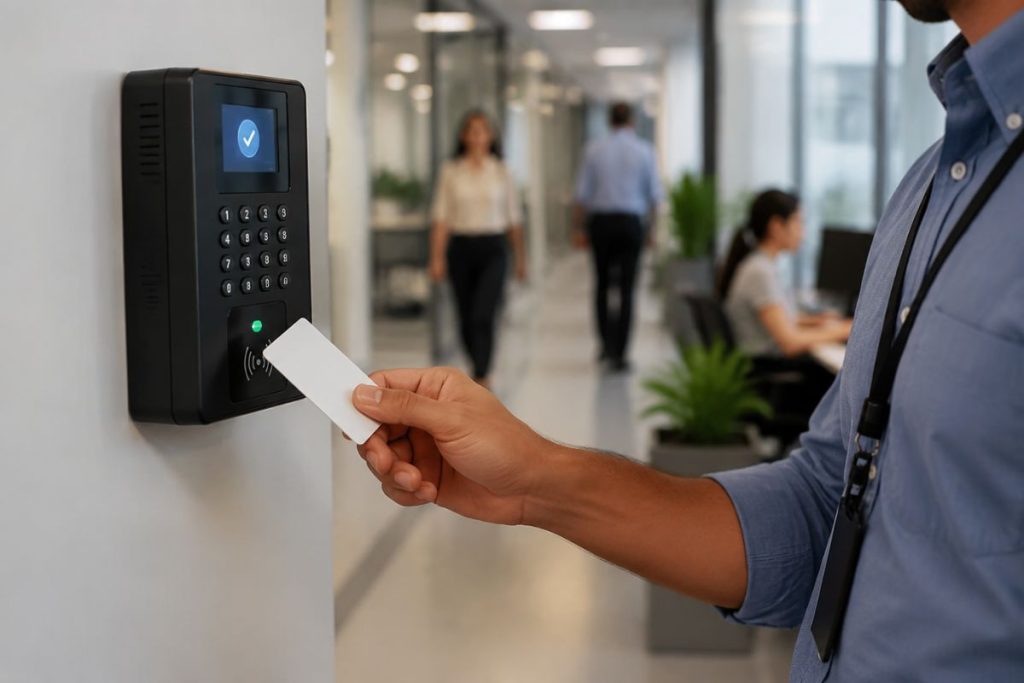
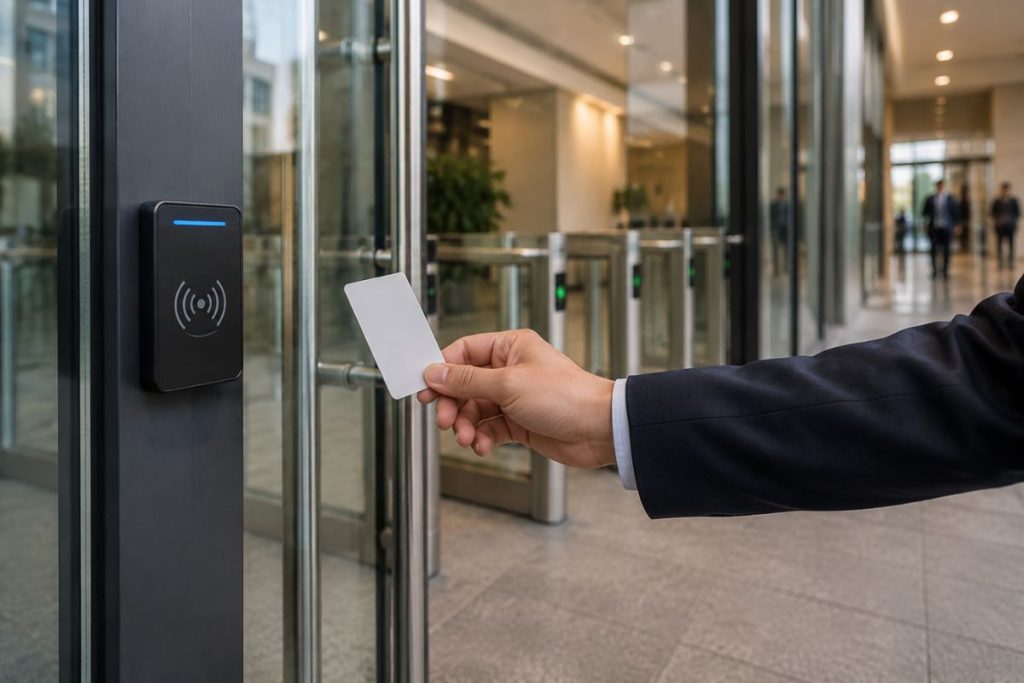
India’s corporate offices, educational institutions, hospitals, government facilities, and manufacturing units require advanced security solutions where unauthorized access, manual attendance tracking, and fragmented security systems create operational risks and administrative challenges.
Ecartes Technology delivers advanced RFID access control system India 2026 solutions combining RFID cards, smart readers, access gates, attendance integration, visitor management, and real-time security monitoring platforms. With 28+ years of RFID expertise and trusted technology experience, we help organizations strengthen security, automate access management, improve compliance, track employee movements, and create safer, smarter, and more efficient workplaces.
RFID access control system India 2026 provides contactless operation (no swiping required), more secure authentication (difficult to counterfeit or duplicate), real-time system updates (access changes take effect immediately), advanced analytics capabilities (pattern detection identifying anomalies), and biometric integration options. Magnetic stripe systems require swiping cards past readers, are vulnerable to cloning/counterfeiting, and provide limited analytics. RFID enables integration with multiple technologies—mobile phones, smartwatches, biometric readers—while magnetic stripe remains proprietary to physical cards.
Lost RFID badges are deactivated immediately through system administration—future access attempts fail while previous access records remain for audit purposes. Employees receive replacement badges continuing access with minimal disruption. The old badge’s deactivation prevents unauthorized access by finder or thief. For comparison, lost magnetic stripe cards create vulnerability until deactivation requiring manual notification and card replacement. Advanced RFID systems notify employees automatically when badge deactivation occurs, enabling quick reporting to facilitate location recovery.
Yes, RFID access control system India 2026 integrates with popular HR, payroll, and enterprise software through standard APIs and data formats. Employee attendance captured through RFID automatically feeds payroll calculations, HR systems update access based on employment status changes, and analytics platforms incorporate RFID occupancy data into workforce planning. Cloud-based RFID platforms provide pre-built integrations for major HR systems (SAP, Workday, etc.), eliminating custom development costs making integration affordable even for small organizations.
Employee attendance RFID eliminates manual punch card systems enabling buddy punching by automating attendance capture. When employees present badges at entry readers, the system automatically logs arrival times with timestamp and badge ID—no manual intervention enabling friends to punch in absent colleagues. The system captures exact entry/exit times preventing claims of longer presence than actually worked. Integration with building security footage can verify badge presenters match badge owners, preventing third-party punch-ins. Detailed audit trails show all access attempts enabling investigation of anomalies.
Modern RFID badges use encrypted chip authentication making counterfeiting extremely difficult without access to manufacturer encryption keys. Biometric integration—requiring fingerprint or iris scan with badge presentation—prevents unauthorized access even if badges are stolen or cloned. Audit trails showing badge usage patterns identify counterfeit badges (using same badge simultaneously in multiple locations impossibly distant, unusual access times for specific employees) triggering security investigation. Advanced systems include physical security features similar to passports (holograms, watermarks) providing visual counterfeit detection.
Yes, RFID access control system India 2026 integrates with emergency management systems. During emergencies, RFID automatically unlocks all accessible doors enabling rapid evacuation without requiring manual unlocking. Simultaneously, systems generate real-time occupancy reports showing which individuals checked in versus checked out—enabling rescue teams identifying individuals potentially still in buildings. After evacuation, temporary access restrictions instate preventing unauthorized re-entry while authorizing first responders. This integrated emergency response saves lives by enabling quick evacuation and informing rescue efforts.

Content writer at Ecartes Technology specializing in RFID solutions, industrial automation, and smart manufacturing. I create research-driven, SEO-focused content that educates businesses and supports digital transformation across India’s industrial sectors.
Enhance efficiency, accuracy, and security with our cutting-edge RFID solutions. From inventory management to access control, we provide customized RFID systems tailored to your needs. Optimize operations and reduce costs—get started today!
© Powered by E-Cartes Technology Pvt. Ltd.
Design & Developed By 


